
Key Details
| Aspect | Information |
|---|---|
| Product Name | Derila Ergo Pillow |
| Core Material | 100% Polyurethane High-Density Memory Foam (Hyperfoam™) |
| Cover Fabric | 98% Polyester, 2% Spandex (Hypoallergenic Organic Cotton Options available) |
| Primary Benefits | Cervical spine alignment, ergonomic neck stabilization, reduction of posture-related muscle tension |
| Price Range | $53.95 AUD – $147.95 AUD (Depending on single vs. multi-pack configurations) |
| Quick Verdict | Consider (Excellent ergonomic physical architecture, but heavily undermined by online sales tactics and rigid sizing) |
Introduction
Chronic sleep disruptions and cervical spine misalignment represent a pervasive modern health crisis. Prolonged desk work, excessive smartphone usage (“text neck”), and unsupportive bedding place severe, non-physiological loads on the cervical spine. Over time, this mechanical strain leads to micro-arousals during the night, muscular spasms, and morning headaches. The Derila Ergo Pillow enters this landscape as a highly targeted, non-invasive wellness device. It is specifically engineered to accommodate side, back, and stomach sleepers by offering tailored mechanical support. This article presents a rigorous, clinical-grade analysis of the pillow’s structural science, materials, anatomical impacts, and transactional risks.
Affiliate Disclosure
This review contains affiliate tracking links. If a purchase is executed through these pathways, a commission may be generated at no additional cost to the consumer. This financial model supports the operation of independent, data-driven research pipelines.
Medical Disclaimer
The information presented herein is intended solely for educational and informational purposes. The Derila Ergo Pillow is a physical sleep aid and does not constitute a certified medical device. It is not designed to diagnose, treat, cure, or prevent any clinical orthopaedic pathology, structural disc herniation, or chronic cervical radiculopathy. Individuals suffering from severe neck trauma or underlying spinal disease must consult a licensed healthcare practitioner before altering their sleep ergonomics.
Deep Ingredient Science (Structural & Material Anatomy)
Evaluating a physical sleep intervention requires looking past marketing buzzwords to scrutinize the raw materials and geometric physics of the product. The Derila Ergo Pillow does not contain pharmacological or dietary supplement ingredients. Instead, its “ingredients” comprise chemical polymers and textile structures engineered to alter human sleep biomechanics.
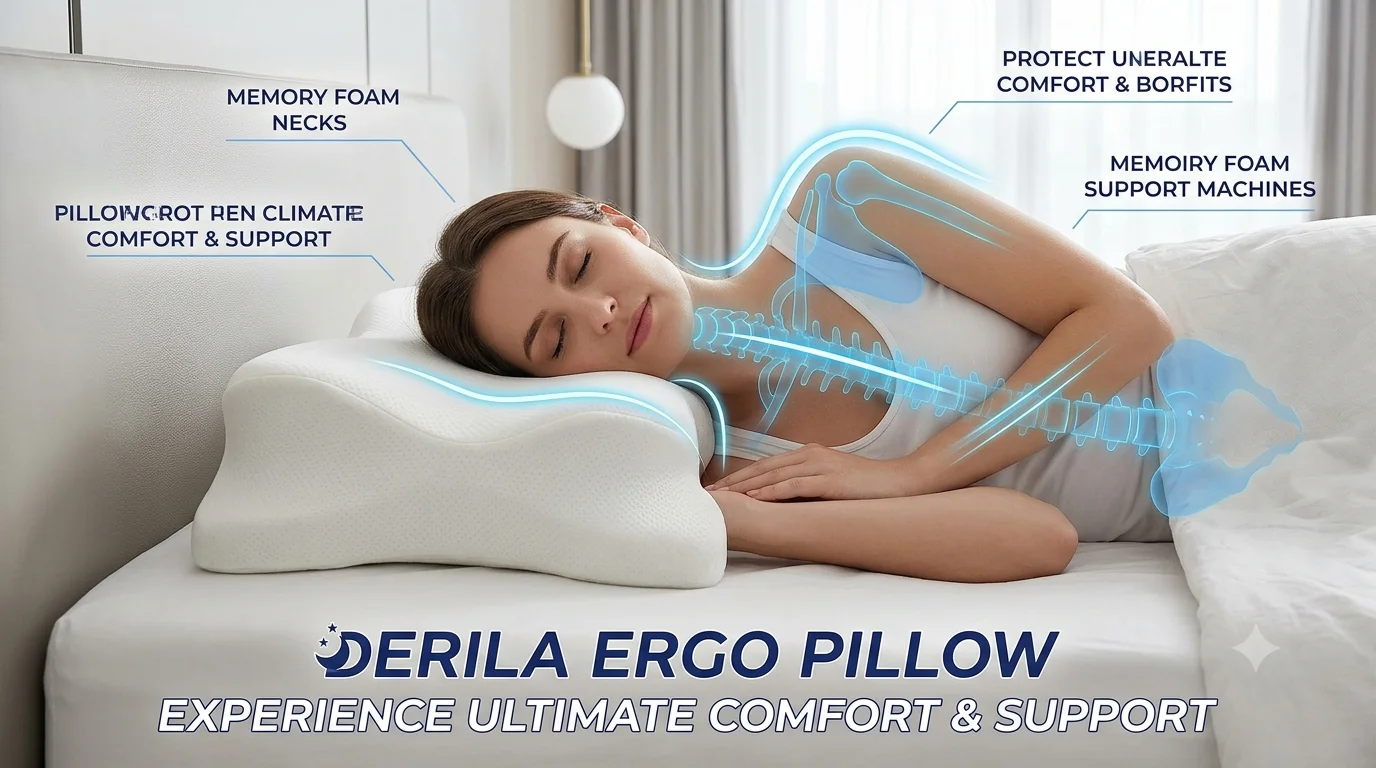
                     [ Ergonomic Butterfly Geometry ]
                                    |
      +-----------------------------+-----------------------------+

      |                             |                             |
[Hyperfoam™ Matrix]       [Cervical Contour Ramp]      [Lateral Support Wings]

      |                             |                             |
Viscoelastic cell         Maintains lordotic curve     Stabilizes side-sleeping
compression reduces       under continuous load.       jaw and shoulder joint.
capillary pressure.
1. 100% Polyurethane High-Density Viscoelastic Memory Foam (Hyperfoam™)
- Biological Mechanism: The core structural substrate of the pillow consists of open-cell polyurethane, commercially designated as Hyperfoam™. Viscoelastic foam operates via a temperature- and pressure-sensitive matrix. Upon contact with human body heat and mass, the polymer chains weaken temporarily, allowing the foam to conform precisely to the anatomical variations of the occipital bone and cervical vertebrae.
- Mechanical Action: This fluid-like displacement maximizes the contact surface area between the skin and the pillow. From a biomechanical perspective, distributing head weight across a larger surface area directly reduces peak pressure points over the bony prominences of the skull. This prevents localized capillary compression, ensuring uninterrupted microcirculation to the soft tissues of the neck during deep sleep phases.
2. Specially Curved Cervical Contour Ramp
- Biological Mechanism: The physical shape of the pillow integrates a central sloping ramp. In the supine position (sleeping on the back), standard rectangular pillows force the cervical spine into a state of unnatural flexion or hyperextension, flattening the natural lordotic curve of the neck.
- Mechanical Action: The contour ramp functions as a passive orthopaedic bridge. It fills the anatomical void beneath the neck, providing a steady upward force that stabilizes the seven cervical vertebrae (C1–C7) in neutral alignment with the thoracic spine. By preserving this lordotic curvature, the pillow minimizes intra-discal pressure and prevents nighttime muscle guarding in the trapezius and levator scapulae muscles.
3. Lateral Butterfly Support Wings & Head Basin
- Biological Mechanism: The exterior perimeter features an architectural butterfly contour with a central concavity. Traditional options fail during lateral shifting; when a sleeper transitions to their side, the shoulder width requires a higher loft than when sleeping on the back.
- Mechanical Action: The central basin cradles the head when supine, preventing excessive lateral rolling. When the user transitions into a side-sleeping posture, the elevated lateral wings provide the precise height clearance needed to match the user’s acromion-process-to-neck distance. This mechanical shift keeps the head from dropping toward the mattress, preventing lateral spine bending and minimizing brachial plexus nerve compression.
4. Temperature-Regulating Polyester-Spandex Textile Blend
- Biological Mechanism: The primary removable cover utilizes a blend consisting of 98% polyester and 2% spandex. The micro-weave pattern is designed to maximize airflow and pull moisture away from the skin surface.
- Mechanical Action: Elevated skin temperatures during sleep trigger a sympathetic nervous system response, resulting in localized sweating, tossing, turning, and fragmented REM cycles. The high breathability of this synthetic weave works in tandem with the open-cell structure of the underlying polyurethane core. Together, they promote passive heat dissipation, creating a more neutral thermal environment that supports deep sleep stages.
Transparency, Structural Risks, & Safety Considerations
While the physical structure of the Derila Ergo Pillow offers verified ergonomic advantages, it is not universally appropriate for every individual. A critical evaluation reveals specific structural limitations and physiological risks that must be understood before purchase.
Who Should NOT Use the Derila Ergo Pillow?
- Individuals with Severe Cervical Radiculopathy or Acute Disc Herniation: Patients experiencing active nerve root compression, shooting pains down the arms, or severe structural degeneration should avoid switching to a firm contour pillow unless directed by an orthopaedic surgeon. The rigid alignment properties can exacerbate nerve impingement if the pillow’s loft does not match the patient’s specific spinal pathology.
- Large-Build Individuals or People with Broad Shoulders: The standard dimensions of the Derila pillow are notably compact compared to traditional bedding options. Individuals with broad shoulders may find the lateral wings do not provide sufficient loft to keep the spine straight when side-sleeping, leading to awkward neck bending.
- Active Stomach Sleepers: Although marketed for all sleeping styles, true prone (stomach) sleeping requires an almost flat surface to prevent hyperextending the neck. The contoured heights of this model can force a stomach sleeper’s neck into an exaggerated, rotating twist, increasing muscular strain.
Potential Physical and Environmental Side Effects
- Transient Musculoskeletal Stiffness: Viscoelastic foam requires a distinct physical adaptation period. During the first 3 to 14 nights, users frequently report localized neck soreness, tension headaches, or general discomfort. This is typically a benign physiological response as tight neck muscles and ligaments adapt to a corrected posture.
- Polyurethane Off-Gassing: Newly manufactured memory foam undergoes a chemical process known as off-gassing, releasing volatile organic compounds (VOCs). This can produce a noticeable chemical odor upon opening. While generally non-toxic, it can cause transient nasal irritation, nausea, or headaches in individuals with chemical sensitivities or asthma. Unboxing the pillow in a well-ventilated space for 48 to 72 hours helps mitigate this issue.
Comprehensive User Sentiment Analysis
Independent consumer reports across platforms like Trustpilot and various consumer advocacy groups highlight a sharp divide between the pillow’s physical performance and the company’s business operations.
Synthesized Positive Feedback
- Substantial Tension Reduction: Reviewers suffering from daily morning stiffness confirm that the contour architecture successfully balances head weight, leading to less tension in the upper back and shoulders.
- Fewer Micro-Arousals: Many users report a noticeable decrease in nighttime tossing and turning. The deep head basin helps keep the body stabilized in a neutral position throughout the night.
- Consistent Material Density: Unlike down or polyester-fill options that flatten out under continuous pressure, the high-density polyurethane core maintains its shape and structural support over months of use.
Synthesized Negative Feedback & Operational Warnings
- Deceptive Online Sales Tactics (Dark Patterns): Independent investigations by consumer organizations like CHOICE Australia have highlighted problematic marketing practices on the manufacturer’s official web storefront. The checkout process frequently uses artificial countdown timers, pre-selected multi-pack bundles, and unexpected upsells. This has led to numerous complaints from consumers who were inadvertently charged for more items than intended.
- Difficult Return Infrastructure: While a 30-day return window is advertised, many buyers report that returning the item is logistically frustrating and costly. Customers are often responsible for high international return shipping fees, which can equal or exceed the value of the pillow itself.
- Sizing Dissatisfaction: A frequent complaint centers on the physical dimensions. The standard model is smaller than a traditional pillow, making it look unusual on standard bedding layouts and restricting movement for restless sleepers.
Comparative Analysis: Derila vs. Competitors
| Metric | Derila Ergo Pillow | Premium Orthopaedic Brands (e.g., Tempur-Pedic) | Budget Amazon Alternatives |
|---|---|---|---|
| Material Density | Medium-Firm Hyperfoam™ | High-Density Proprietary Foam | Low-Density Polyurethane |
| Ergonomic Shape | Fixed Butterfly Contour | Contoured or Traditional Profiles | Simple Ergonomic Waves |
| Customization | Non-adjustable loft | Often available in multiple sizes | Removable foam layers |
| Sales Transparency | Low (Heavy use of dark patterns) | High (Standard retail infrastructure) | High (Marketplace protections) |
(FAQs)
1. How long does the physical adjustment period take when switching to the Derila Ergo Pillow?
The musculoskeletal system typically requires between 7 to 14 days to adapt to the corrected posture provided by a contour pillow. Because your neck muscles have likely spent years compensating for unsupportive pillows, changing to a neutral alignment can initially feel unusually firm or uncomfortable. Users should test the pillow consistently for at least two weeks before assessing its long-term impact on neck pain and sleep quality.
2. Does the Derila Ergo Pillow cure chronic snoring and sleep apnea?
No. The Derila Ergo Pillow is not an approved treatment for sleep apnea or chronic snoring. Its structural design can help keep the airways slightly more open by preventing the head from sinking too far backward or forward. While this minor postural adjustment may reduce mild, position-dependent snoring, it cannot correct structural airway obstructions or neurological sleep disorders. Anyone suspecting obstructive sleep apnea should seek an overnight clinical sleep study.
3. How do you safely clean and wash the memory foam core?
The polyurethane memory foam core cannot be washed or submerged in water. Exposing viscoelastic foam to running water or machine agitation breaks down its internal cell walls, permanently ruining its structural support and responsiveness. To clean the pillow, unzip and remove the outer cover, which can be safely machine-washed on a gentle cycle. If the inner foam core becomes soiled, it should be spot-cleaned using a damp cloth and mild detergent, then allowed to air-dry completely away from direct sunlight.
Critical Verdict & Strategic Purchasing Advice
The Derila Ergo Pillow features a solid, well-engineered ergonomic design. Its butterfly shape, central head basin, and high-density viscoelastic foam core work well together to manage posture-related cervical strain and muscle fatigue. For individuals of average physical build seeking a non-invasive way to improve their sleep alignment, the physical product delivers genuine biomechanical support.
However, the quality of the product is separate from the company’s marketing and sales methods. Potential buyers need to navigate the official website carefully to avoid unwanted charges from pre-checked multi-packs, forced warranties, and complex international return policies. If you decide to buy this pillow, review your checkout details carefully before confirming payment, and ensure the compact dimensions match your sleep preferences.